
Part 7 of 10 in Fully Functional Factory
Self-Healing Pipelines: Closing the Loop
You've built the factory. You've instrumented it with observability. You have dashboards showing metrics in real-time. You know when something breaks.
But what happens next?
In traditional software development, the answer is: a human notices, investigates, fixes it, and deploys again.
For a self-improving factory, the answer should be different: the factory notices, investigates, fixes itself, and learns not to make the same mistake again.
This is what separates a monitored system from a self-healing one.
The Traditional Reactive Flow
Let's be honest about what usually happens when something goes wrong:
Friday, 4:47 PM: Deploy
- Feature "Add pagination to user list" goes live
- CI/CD passes
- Tests pass
- Deployed successfully
Friday, 5:23 PM: First User Report
- User tweets: "Your app is super slow now"
- No one sees it yet
Monday, 9:14 AM: More Reports
- Three support tickets: "Dashboard takes forever to load"
- Engineer gets paged
Monday, 9:45 AM: Investigation Begins
- Which deploy caused it?
- Check Git history
- Check APM logs
- Oh, Friday afternoon deploy
- Pagination query has no database index
- P95 latency jumped from 145ms to 2,400ms
Monday, 10:30 AM: Fix Deployed
- Add database index
- Deploy fix
- Latency back to normal
Monday, 11:00 AM: Postmortem Meeting Scheduled
- "Let's make sure this doesn't happen again"
- Meeting happens two weeks later (if at all)
- Action items: "Add more database indexes," "Better load testing"
- No concrete changes to the pipeline
Total time from issue to fix: 64 hours (mostly weekend downtime)
Learning captured: minimal
Process improved: not really
This isn't anyone's fault. It's just how reactive systems work. Problems are fixed after they're discovered. Learning happens informally, if at all.
The Self-Healing Flow
Now let's see what happens with a self-healing factory:
Friday, 4:47 PM: Deploy
- Feature "Add pagination to user list" goes live
- CI/CD passes
- Tests pass
- Deployed successfully
Friday, 4:48 PM: Automated Health Check Runs
- Post-Deployment Health Checker (Checker #12) executes
- Hits every endpoint with test data
- Checks: response codes, schemas, latency
- Alert: P95 latency for
/api/usersendpoint: 2,380ms (threshold: 300ms) ⚠️
Friday, 4:49 PM: Automated Rollback Triggered
- Health check failure triggers auto-rollback
- Previous version redeployed
- Service restored to normal latency: 148ms
- Total user-facing downtime: 2 minutes
Friday, 4:50 PM: Bug Ticket Auto-Created
- Factory creates ticket: "Deployment rolled back: Latency spike in pagination endpoint"
- Attached: Health check results, deployment diff, performance graphs
- Assigned to: Bug Fix Agent
Friday, 5:15 PM: Root Cause Analysis Begins
- Escaped Defect Analyzer (Checker #14) reads:
- Bug ticket
- Rolled-back deployment
- Code changes (pagination logic added)
- Checkers that passed (all 20)
- LLM analysis identifies: Pagination query missing database index
- Recommendation: Add Performance Benchmark Checker for database queries
Friday, 5:30 PM: Fix Generated and Deployed
- Bug Fix Agent generates fix: Add index to user table
- Fix passes through all checkers (including new performance check)
- Deployed successfully
- Health check passes: P95 latency 142ms ✓
Friday, 5:31 PM: Factory Improvement Applied
- Performance Benchmark Checker (#17) updated with new rule: "Flag queries on paginated endpoints without indexes"
- Next 100 features retrospectively checked: Would have caught 2 similar issues in past deploys
- Change validated and committed to factory config
Total time from issue to fix: 44 minutes
User-facing downtime: 2 minutes
Learning captured: automated root cause analysis stored, new checker rule added
Process improved: yes, factory now catches this class of issue before deploy
This is what self-healing looks like.
The Three Layers of Self-Healing
Self-healing isn't magic. It's three layers working together:
Layer 1: Detection (Know When Something's Wrong)
Post-Deployment Health Checks
The moment a deployment completes, automated health checks run:
-
API Contract Tests: Hit every endpoint with valid and invalid inputs
- Does it return the expected status codes?
- Does the response match the schema?
- Are error cases handled correctly?
-
Performance Tests: Measure latency under realistic load
- Is P95 latency within SLO?
- Are database queries fast enough?
- Is memory usage normal?
-
Integration Tests: Verify dependencies still work
- Can it reach the database?
- Are downstream services responding?
- Are auth tokens valid?
These aren't tests you wrote manually. Tools like Schemathesis auto-generate comprehensive API tests from your OpenAPI/Smithy definitions. You define the contract once; the health checks are generated automatically.
Regression Detection
When you deploy a new version, the factory also checks: Did we break something that used to work?
Tools like Keploy record API traffic from previous versions and replay it against the new deployment. If the same input produces different output, that's a regression.
This catches the sneaky bugs:
- "We added a feature and accidentally changed the response format of an existing endpoint"
- "We optimized a query and accidentally changed the sort order"
- "We fixed a bug and accidentally broke a different feature"
Continuous Monitoring
Health checks don't just run once. They run on a schedule:
- Every 5 minutes: smoke tests
- Every hour: full integration tests
- Every day: load tests
If a service starts degrading gradually (memory leak, disk filling up, cache expiring), the factory notices before users do.
Layer 2: Response (Fix It Now)
Automated Rollback
When a health check fails immediately after deploy:
- Alert fires
- Previous version redeployed automatically
- Health check re-runs against old version
- If it passes, incident is mitigated
- Total time: <2 minutes
No human decision needed. The rollback happens automatically. The human gets notified after it's already fixed.
Auto-Created Bug Tickets
The factory doesn't just roll back. It creates a detailed bug ticket:
Title: Deployment rolled back: Latency spike in pagination endpoint

Description:
- Deployment SHA: abc123
- Rolled back to: xyz789
- Failure reason: P95 latency 2,380ms (threshold 300ms)
- Failed endpoint: GET /api/users?page=2
- Time to detection: 1 minute
- Time to rollback: 1 minute

Attached:
- Health check logs
- Deployment diff
- Performance graphs (before/after)
- Stack traces (if errors occurred)

Assigned to: Bug Fix Agent
Priority: High
The Bug Fix Agent now has everything it needs to reproduce, diagnose, and fix the issue—without asking a human for context.
Targeted Fixes
The factory doesn't just blindly retry. It:
- Reads the bug ticket
- Analyzes what changed (the diff)
- Identifies the likely cause (missing index, logic error, config issue)
- Generates a targeted fix
- Passes it through all checkers again
- Deploys only if checkers pass
This is surgical, not brute-force.
Layer 3: Learning (Don't Make the Same Mistake Twice)
This is where self-healing becomes self-improving.
Escaped Defect Analysis
When a bug reaches production (even if caught by health checks), the factory asks: Why didn't the checkers catch this?
The Escaped Defect Analyzer performs root cause analysis:
Input:
- The bug ticket
- The code that was deployed
- The checkers that ran (all 20)
- The prompts that were used
- The test suite that passed
Analysis:
-
Which checker should have caught this?
- "Performance Benchmark Checker (#17) should have flagged the missing index"
-
Why didn't it?
- "Checker #17 wasn't configured to check pagination query performance"
-
What pattern does this represent?
- "3% of features with pagination logic have similar performance issues"
Recommendation:
- Add rule to Checker #17: "Flag queries on paginated endpoints without indexes"
- Increase Test Coverage Gate threshold from 80% to 85% for endpoints with database queries
Validation:
- Re-run last 100 features through updated checkers
- Result: Would have caught 2 similar latent issues
- Adopt the change
This is continuous optimization: causal analysis and systematic improvement.
Prompt Effectiveness Tracking
The factory also tracks which prompts consistently produce code that fails checkers.
Scenario: The Architectural Consistency Checker has a 31% rework rate (was 18% last week).
Analysis:
- Which prompt changed? "Business Logic Generation" prompt updated Tuesday
- What's failing? Code violating layering rules (service layer calling controller layer)
- Root cause? New prompt doesn't emphasize architecture document enough
Action:
- Revert prompt
- Test: Rework rate drops to 19%
- Learn: Document that architectural emphasis must be explicit in prompt
This is learning at the prompt level, not just the code level.
Proactive Resilience: Breaking Things Before Users Do
Self-healing isn't just reactive. It's also proactive.
Chaos Engineering Integration
After a deployment succeeds and health checks pass, the factory can optionally run chaos experiments:
Chaos Resilience Checker (#18) does this:
-
LLM reads the architecture (or structured architecture model)
- Identifies: "This service depends on: User DB, Auth Service, Redis cache"
-
LLM designs experiments:
- What if User DB is slow? (Inject 2-second latency)
- What if Auth Service is down? (Return 503)
- What if Redis cache is empty? (Flush all keys)
-
Programmatic execution: Tools like LitmusChaos or Chaos Mesh execute the experiments
- Inject the fault
- Monitor service behavior
- Measure: Does it handle the failure gracefully?
-
Results:
- ✅ DB latency handled: Request timeout after 1s, returns cached data
- ⚠️ Auth Service down: App crashes with 500 error (no fallback)
- ✅ Redis empty: Degrades gracefully to DB queries
-
Auto-created hardening tickets:
- "Add fallback for Auth Service unavailability"
- Assigned to: Enhancement Agent
- Priority: Medium
The factory found a reliability gap before a real outage.
This is Netflix-level resilience engineering, automated.
The Complete Feedback Loop
Here's how all the pieces fit together:
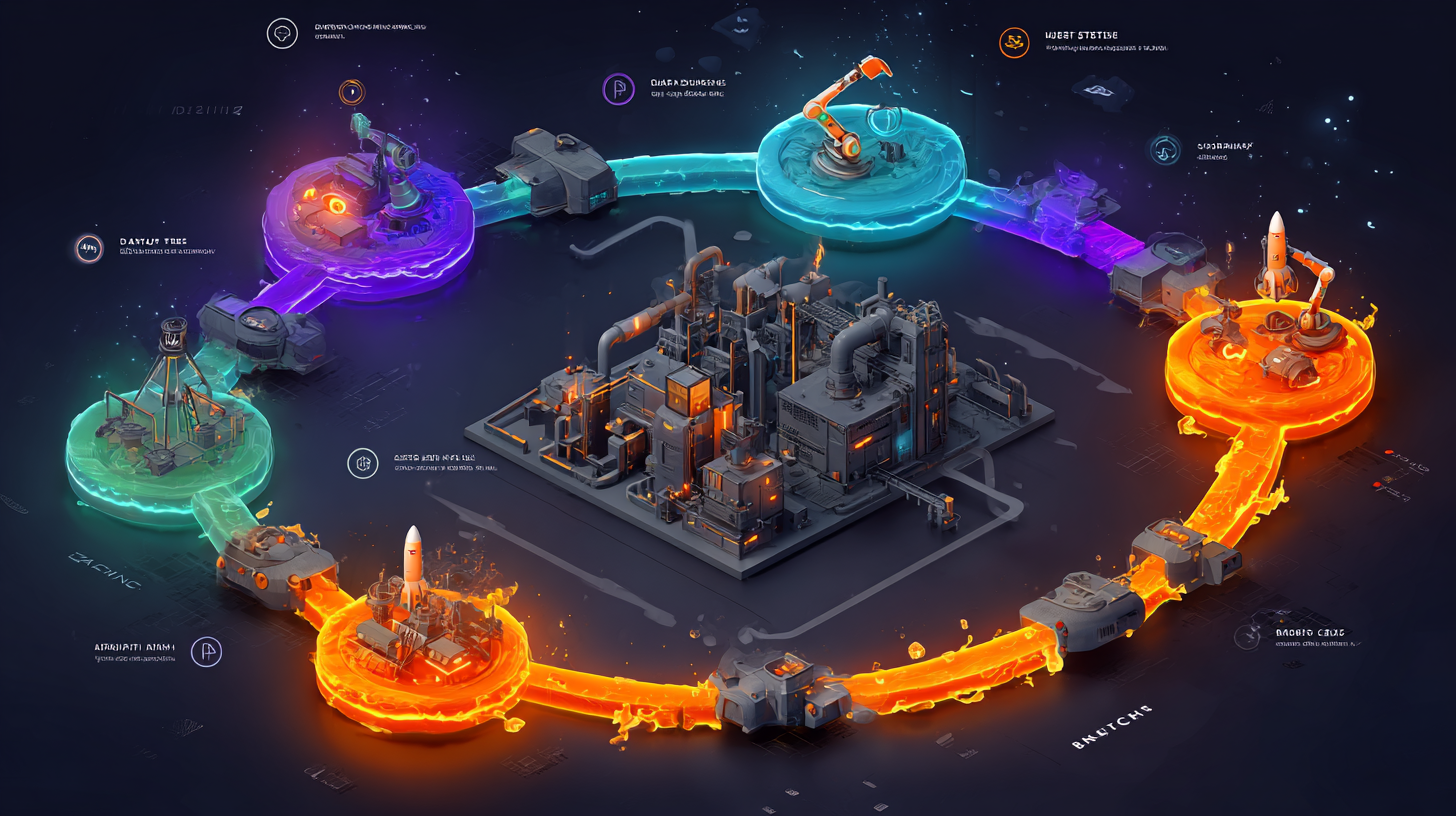
Build → Deploy → Detect → Respond → Learn → Improve
- Build: Factory generates code, passes through 20 checkers
- Deploy: Code ships to production
- Detect: Health checks run, regression tests execute, monitoring watches
- Respond: If something's wrong, auto-rollback + create bug ticket
- Learn: Escaped defect analysis identifies which checker missed it and why
- Improve: Factory updates checker config, validates improvement, commits change
Next feature: Runs through improved pipeline, with one more bug class prevented.
This loop runs automatically. Forever. Getting a little bit better each time.
What This Means for You
Let's be concrete about what changes:
Before Self-Healing:
- Bug escapes to production
- Humans notice (maybe)
- Humans investigate (hours)
- Humans fix (more hours)
- Humans discuss "lessons learned" (rarely actionable)
- Same bug pattern happens again in 3 months
After Self-Healing:
- Bug escapes to production
- Factory notices (seconds)
- Factory investigates (minutes)
- Factory fixes (minutes)
- Factory learns (automatic root cause analysis)
- Same bug pattern prevented by updated checker
Time to fix: 64 hours → 44 minutes
Downtime: hours → 2 minutes
Learning captured: informal → structured and validated
Process improved: "maybe next time" → "prevented automatically from now on"
The Trust Question, Revisited
In Post 6, we talked about trust being built on evidence.
Self-healing takes it further: Trust is built on demonstrated recovery capability.
It's not just "the factory works when things go right." It's "the factory recovers when things go wrong."
You trust it because you've seen it:
- Detect a latency spike in 60 seconds
- Roll back automatically
- File a detailed bug ticket
- Generate a fix
- Deploy the fix
- Update its own checkers to prevent recurrence
You're not hoping it can handle production. You've watched it handle production failures and get better from them.
The Definition of a Factory
We've used the word "factory" throughout this series. Here's why it's the right word:
A script runs the same commands every time. If it fails, it fails the same way every time.
A pipeline runs a sequence of steps. If a step fails, it stops and waits for a human.
A factory runs a process that:
- Measures its own performance
- Detects its own failures
- Responds to problems automatically
- Analyzes what went wrong
- Updates its own process
- Gets measurably better over time
Self-healing is what makes it a factory instead of just a fancy script.
What Makes This Possible
You might be thinking: "This sounds great, but isn't it incredibly complex to build?"
Here's the surprising answer: Most of this already exists.
- Post-deployment health checks? Schemathesis auto-generates them from API specs.
- Regression detection? Keploy records and replays real traffic.
- Rollback automation? Standard Kubernetes/Docker orchestration.
- Bug ticket creation? Linear or Jira API calls.
- Root cause analysis? LLM reading structured logs from Langfuse.
- Chaos experiments? LitmusChaos has a library of pre-built scenarios.
The building blocks are open source and mature.
What was missing wasn't the tools. What was missing was:
- The architecture to connect them
- The observability to feed them data
- The discipline to run them consistently
Humans struggle with #3. Machines don't.
In the next post, we'll map out the entire tool ecosystem—showing exactly which open-source tools handle which parts, what's available off-the-shelf, and what requires custom integration.
Because the revelation isn't that you need to build everything from scratch. It's that 70% of the solution is already built. You just need to orchestrate it.
Next in the series: Standing on Giants: The Composable Stack — How one implementation achieved ~70% off-the-shelf tooling by separating concerns into composable layers. The tools are ready. The question is how to wire them together.
Fully Functional Factory
Part 7 of 10
The Observability Foundation: Watching the Factory Work
Standing on Giants: The Composable Stack
View all posts in this series
- 1.The Best Practices We Abandoned
- 2.Why Machines Don't Get Bored
- 3.The Anatomy of a Self-Checking System
- 4.The Maturity Ladder: Why Organizations Get Stuck
- 5.Measuring What Matters: The Metrics You've Always Wanted
- 6.The Observability Foundation: Watching the Factory Work
- 7.Self-Healing Pipelines: Closing the Loop
- 8.Standing on Giants: The Composable Stack
- 9.Architecture as Code: The Living Architecture
- 10.Rethinking Your AI Tooling Strategy